Written by
in
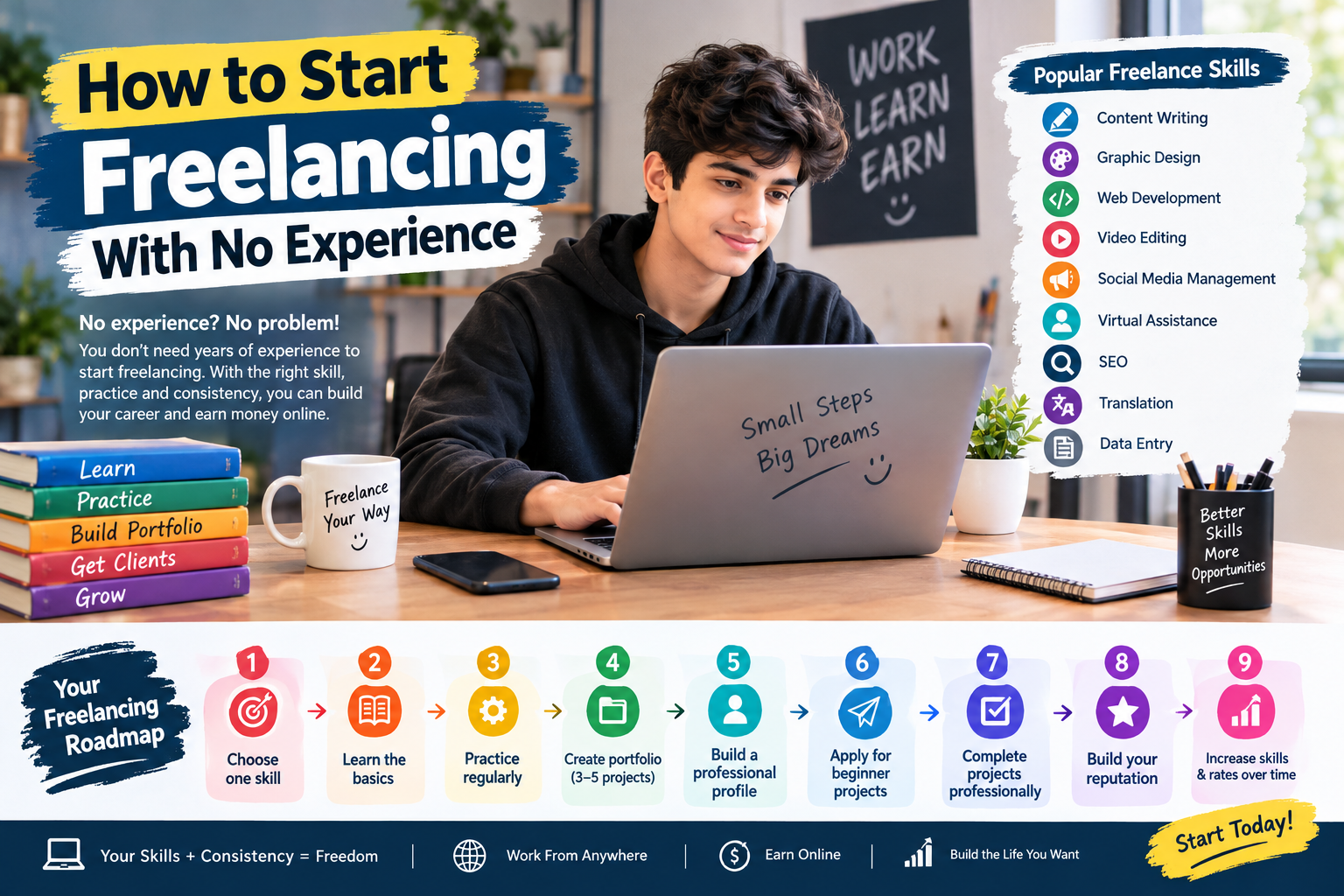
Starting freelancing with no professional experience can feel difficult, but you do not need years of experience to get your first client. You need a useful skill, a good portfolio, a professional profile, and consistency.
Whether you are a student, beginner, or someone looking for a new career, freelancing can be a practical way to build experience and earn money online.
What Is Freelancing?
Freelancing means working independently for clients instead of being a permanent employee of one company. Freelancers can work on short-term projects, long-term contracts, or individual tasks.
Common freelance services include:
- Content writing
- Graphic design
- Web development
- Video editing
- Social media management
- Virtual assistance
- SEO
- Translation
- Data entry
1. Choose One Skill
The first step is to choose one skill that you can learn and offer to clients.
Do not try to learn everything at once. Pick one area and focus on improving it.
For example, if you enjoy writing, start with content writing. If you like technology, consider web development. If you enjoy visual work, graphic design or video editing may be suitable options.
2. Learn the Basics for Free
You do not necessarily need an expensive course to start learning.
Use free online tutorials, documentation, practice exercises, and educational videos. Spend time learning the fundamentals before trying to sell your service.
Create a simple learning schedule and practice regularly.
3. Build a Portfolio Without Clients
One of the biggest problems beginners face is having no previous work to show.
You can solve this by creating sample projects.
For example:
Content Writer: Write three sample blog posts.
Graphic Designer: Create sample logos, social media posts, or banners.
Web Developer: Build a simple personal website or demo website.
Video Editor: Create a few short sample edits.
Your portfolio demonstrates what you can do, even if you have not worked with a real client yet.
4. Create a Professional Profile
Once you have a skill and portfolio, create a professional profile on suitable freelance platforms and professional networks.
Your profile should clearly explain:
- What service you provide
- Who you can help
- What skills you have
- What type of projects you accept
- Examples of your work
Use a clear profile photo and write a simple, professional description.
5. Start With Small Projects
As a beginner, focus on getting your first few projects rather than trying to handle large projects immediately.
Small projects can help you:
- Build experience
- Improve communication
- Collect reviews or testimonials
- Understand client expectations
- Strengthen your portfolio
After gaining experience, you can gradually take on more complex work.
6. Write Better Proposals
When applying for a project, avoid sending the exact same message to every client.
Read the project description carefully and explain how you can help.
A good proposal should be:
- Short and clear
- Relevant to the project
- Professional
- Focused on the client’s needs
- Supported by examples of your work
Instead of simply saying, “I can do this job,” explain what you will do and why your skills are relevant.
7. Communicate Professionally
Good communication is an important part of freelancing.
Respond politely, ask for clarification when necessary, meet agreed deadlines, and keep the client updated about the project.
You can be highly skilled, but poor communication can still create problems with clients.
8. Avoid Common Beginner Mistakes
New freelancers often make mistakes such as:
- Offering too many unrelated services
- Copying other freelancers’ profiles
- Creating fake experience
- Accepting projects they cannot complete
- Missing deadlines
- Sending generic proposals
- Expecting immediate success
Focus on building real skills and delivering quality work.
9. Keep Improving Your Skills
Freelancing is competitive, so learning should continue after you get your first client.
Follow changes in your industry and learn new tools that can improve your work.
For example, a content writer can learn SEO, while a web developer can learn modern development tools.
10. Be Patient and Consistent
Getting your first freelance client may take time. Do not assume that you have failed simply because you do not get a project immediately.
Use the early stage to improve your portfolio, proposals, communication, and skills.
Consistency can help you gradually build experience and confidence.
A Simple Freelancing Roadmap
Step 1: Choose one skill
↓
Step 2: Learn the fundamentals
↓
Step 3: Practice regularly
↓
Step 4: Create 3–5 portfolio projects
↓
Step 5: Build a professional profile
↓
Step 6: Apply for suitable beginner projects
↓
Step 7: Complete projects professionally
↓
Step 8: Build your reputation
↓
Step 9: Increase your skills and rates over time
Final Thoughts
Starting freelancing with no experience is possible if you approach it as a skill-building process. Choose one skill, practice it, create a portfolio, build a professional profile, and consistently look for suitable opportunities.
Your first goal should not simply be to make money. Focus on developing valuable skills and building real experience. As your skills and portfolio grow, you can pursue more opportunities and develop freelancing into a long-term career.