Written by
in
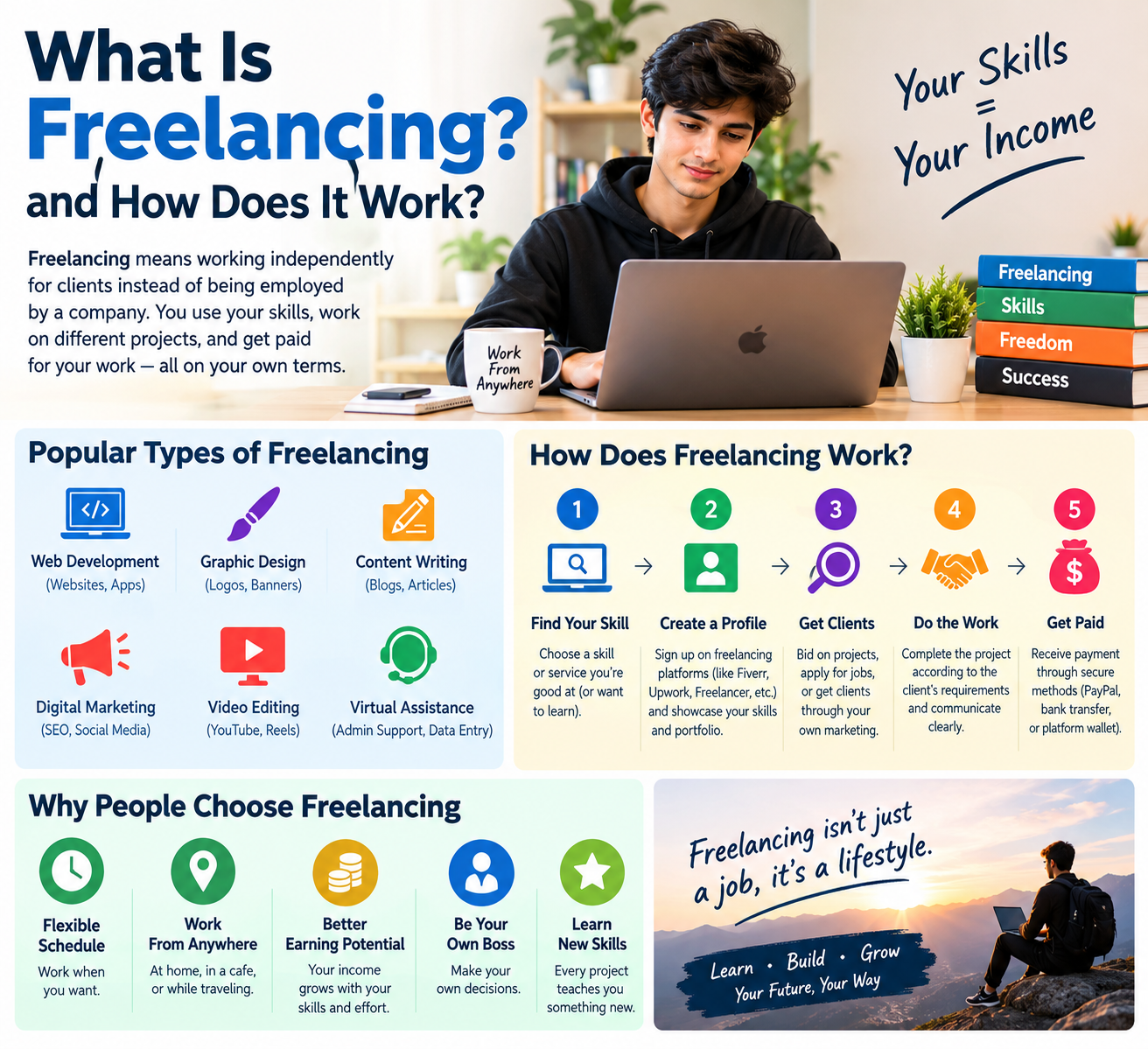
Freelancing has become one of the most popular ways to work online. Instead of working as a permanent employee for one company, freelancers provide their skills and services to different clients on a project or contract basis.
Whether you are a student, beginner, professional, or someone looking for flexible work, freelancing can be a way to build valuable skills and earn money online.
What Is Freelancing?
Freelancing means working independently for clients without being a permanent employee of a single company.
A freelancer might provide services such as:
- Web development
- Graphic design
- Content writing
- Video editing
- Digital marketing
- SEO
- Virtual assistance
- Social media management
- Translation
- Data entry
For example, a business may need a website. Instead of hiring a full-time developer, the business can hire a freelance web developer to complete the project.
How Does Freelancing Work?
The freelancing process is usually simple:
1. Choose a Skill
First, decide what service you want to offer. Choose something you enjoy or are willing to learn.
For example, you could start with content writing, graphic design, WordPress, or video editing.
2. Learn and Practice
Before looking for clients, develop your skills. Free tutorials, online courses, practice projects, and personal projects can help you improve.
You don’t need to know everything before starting. Focus on learning the skills required for the services you want to sell.
3. Create a Portfolio
A portfolio shows potential clients what you can do.
If you don’t have previous clients, create sample projects. For example, an aspiring graphic designer can create sample logos, while a web developer can build sample websites.
4. Create a Freelance Profile
Freelancers can use online platforms to find clients. Popular platforms include Upwork, Fiverr, Freelancer, and others.
Your profile should clearly explain:
- What service you provide
- What skills you have
- What type of projects you can handle
- Examples of your work
- Your professional experience
5. Find Projects
Clients post projects or search for freelancers who have the skills they need.
Depending on the platform, freelancers may send proposals, create service listings, or communicate directly with potential clients.
6. Discuss the Project
Before accepting a project, make sure you understand the client’s requirements.
Discuss the:
- Project scope
- Deadline
- Deliverables
- Payment
- Number of revisions
- Communication method
Clear communication can prevent misunderstandings later.
7. Complete the Work
Once the project begins, complete the agreed work according to the client’s requirements and deadline.
Quality and reliability are important because satisfied clients may leave positive reviews or return with more work.
8. Receive Payment
After completing the project according to the agreed terms, the freelancer receives payment through the platform or payment method agreed with the client.
Payment methods and fees vary depending on the platform and country.
Advantages of Freelancing
Freelancing can offer several benefits.
Flexible Schedule
Many freelancers have more control over when and where they work, although deadlines and client requirements still need to be respected.
Work With Different Clients
Freelancers can work with clients from different industries and countries. This can provide experience with different types of projects.
Build Your Career
Freelancing can help you develop a portfolio, professional network, communication skills, and technical skills.
Start With a Small Project
You can begin with smaller projects and gradually take on more complex work as your skills and experience grow.
Challenges of Freelancing
Freelancing also comes with challenges.
Finding Clients
Getting your first client can take time. Beginners may need to build a strong portfolio and apply consistently.
Irregular Income
Unlike a traditional salaried job, freelance income can vary from month to month.
Competition
Many freelancers offer similar services, so developing useful skills and creating a strong portfolio is important.
Managing Your Own Work
Freelancers are responsible for managing deadlines, communication, projects, invoices, and their own learning.
How Much Can a Freelancer Earn?
There is no single fixed freelance salary. Earnings depend on factors such as:
- Skill level
- Type of service
- Experience
- Client demand
- Number of projects
- Pricing
- Location
- Quality of work
A beginner may start with smaller projects and increase their rates as their skills, portfolio, and experience improve.
Freelancing vs. Traditional Employment
The main difference is the working relationship.
A traditional employee usually works for one organization under an employment agreement and receives regular compensation.
A freelancer generally works independently and may have multiple clients and separate project agreements.
Neither approach is identical for everyone. Your choice can depend on your skills, career goals, financial situation, and preferred working style.
How to Start Freelancing as a Beginner
If you want to start freelancing, follow this simple roadmap:
Step 1: Choose one skill.
Step 2: Learn the basics.
Step 3: Practice regularly.
Step 4: Create 3–5 sample projects.
Step 5: Build a professional portfolio.
Step 6: Create a freelance profile.
Step 7: Start applying for suitable projects.
Step 8: Communicate professionally with clients.
Step 9: Deliver quality work on time.
Step 10: Use your experience to improve your skills and portfolio.
Final Thoughts
Freelancing is a flexible way to offer your skills to clients and build a career independently. However, it is not an instant way to make money. Success usually requires learning valuable skills, creating quality work, finding clients, communicating professionally, and consistently improving.
If you’re a beginner, start with one skill instead of trying to learn everything at once. Build your portfolio, gain experience through small projects, and gradually develop your freelance career.
Ready to start? Choose one skill today and take your first step toward be