
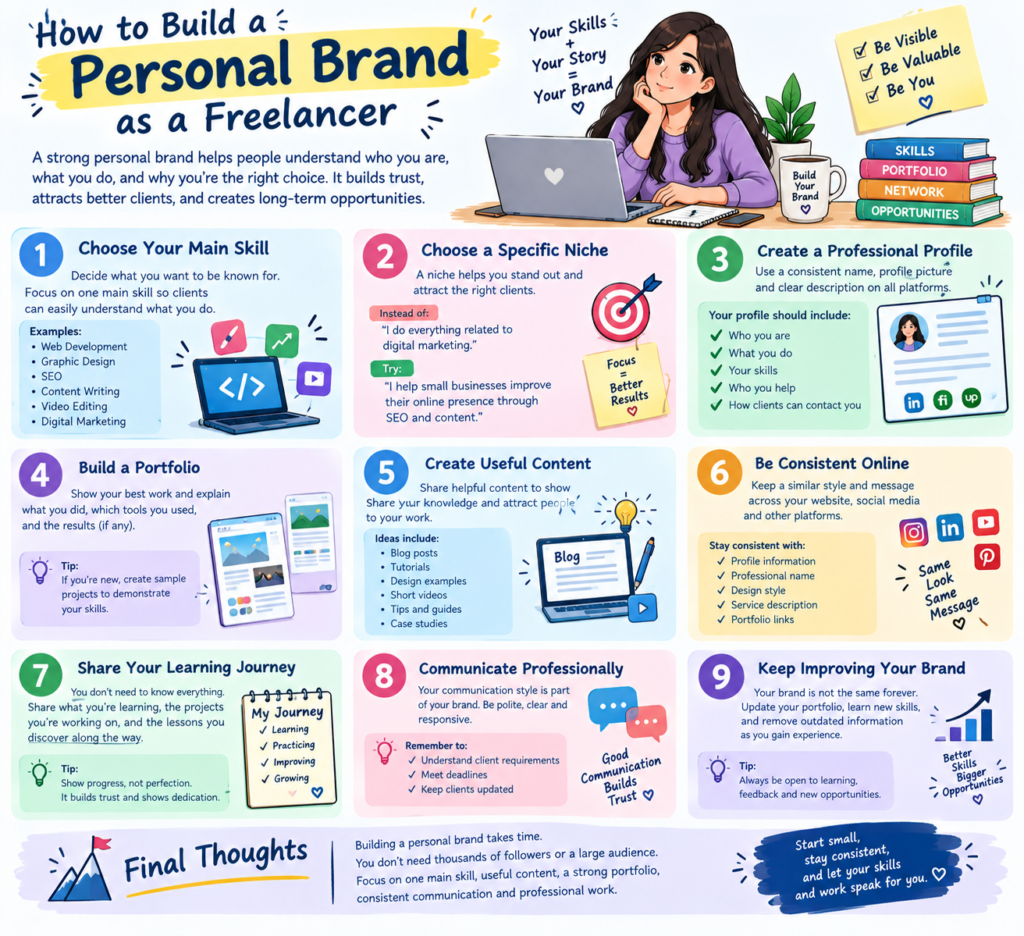
A personal brand helps people understand who you are, what you do, and what makes your services useful. For freelancers, a strong personal brand can make it easier to present your skills and build professional relationships online. click here
1. Choose Your Main Skill
Start by deciding what you want to be known for.
For example:
- Web Development
- Graphic Design
- SEO
- Content Writing
- Video Editing
- Digital Marketing
You can offer multiple services later, but having a clear main skill makes your profile easier to understand.
2. Choose a Specific Niche
A niche is a specific area you focus on.
Instead of saying:
“I do everything related to digital marketing.”
You could focus on:
“I help small businesses improve their online presence through SEO and content.”
A clear niche helps potential clients quickly understand what you offer.
3. Create a Professional Profile for brand
Use a consistent name, profile picture, introduction, and description across your professional platforms.
Your profile should clearly explain:
- Who you are
- What you do
- What skills you have
- Who you help
- How clients can contact you
Keep the information simple and professional.
4. Build a Portfolio
Your portfolio is an important part of your personal brand because it shows what you can actually do.
Include your best work and explain briefly what you created and which skills or tools you used.
If you are new to freelancing, create sample projects to demonstrate your abilities.
5. Create Useful Content for your brand
Sharing helpful content can help people discover your skills.
You could create:
- Blog posts
- Tutorials
- Design examples
- Short educational videos
- Tips and guides
- Case studies of your projects
For example, a web developer could share tips about WordPress or website design.
6. Be Consistent Online brand
Try to maintain a consistent style across your website and social media profiles.
Use similar:
- Profile information
- Professional name
- Design style
- Description of your services
- Portfolio links
Consistency can make your online presence easier to recognize.
7. Share Your Learning Journey
You don’t need to pretend that you know everything.
You can share what you are learning, projects you are working on, and lessons you discover along the way.
This can show potential clients that you are actively developing your skills.
8. Communicate Professionally
Your personal brand is also influenced by how you communicate.
Reply politely, understand client requirements, meet agreed deadlines, and keep clients updated about their projects.
Professional behavior can become an important part of your reputation.
9. Keep Improving Your Brand
Your personal brand doesn’t have to remain the same forever.
As you gain experience, update your portfolio, improve your profile, learn new skills, and remove outdated information.
Final Thoughts
Building a personal brand takes time. You don’t need thousands of followers or a large audience to get started.
Focus on one main skill, useful content, a strong portfolio, consistent communication, and professional work.
Start small, stay consistent, and let your skills and work speak for you.