
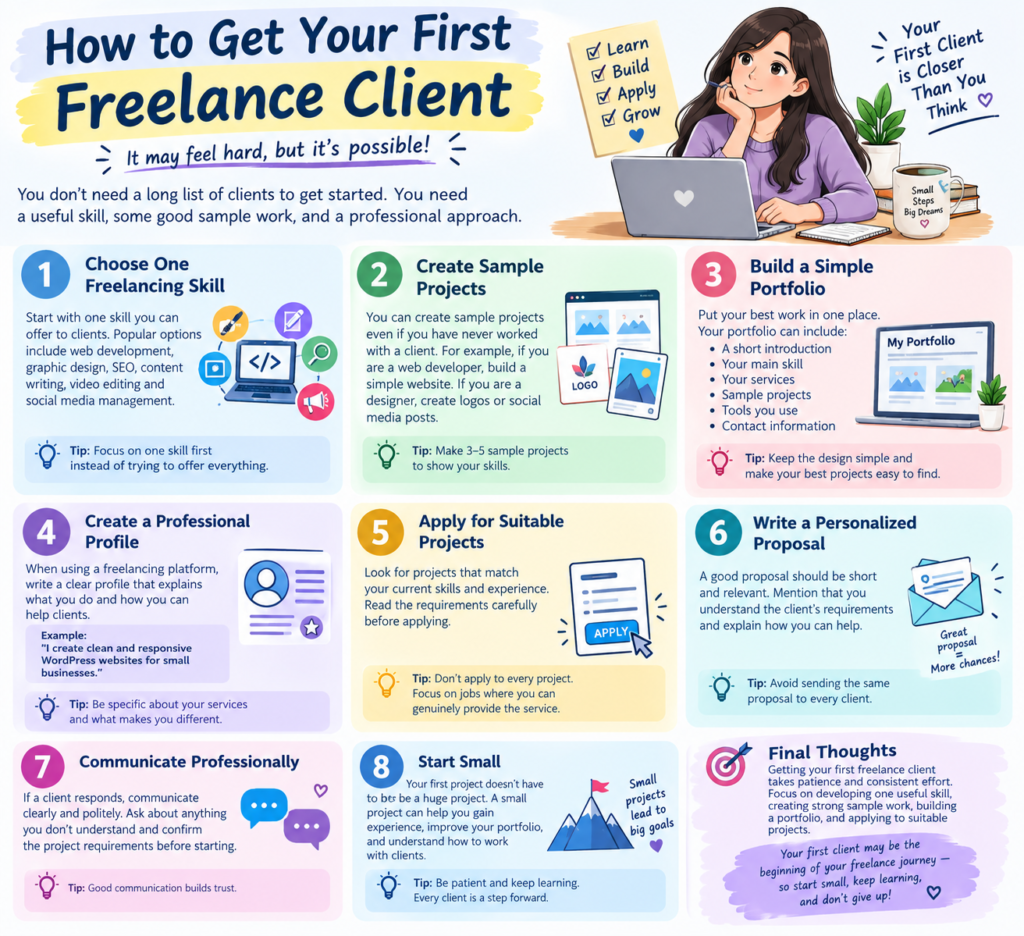
Getting your first freelance client can feel difficult, especially when you have no previous experience. The good news is that you don’t need a long list of clients to get started. You need a useful skill, some good sample work, and a professional approach. click here
1. Choose One Freelancing Skill
Start by choosing one skill you can offer to clients. Some popular options include:
- Web Development
- Graphic Design
- SEO
- Content Writing
- Video Editing
- Social Media Management
Focus on one skill first instead of trying to offer everything.
2. Create Sample Projects for client
You can create sample projects even if you have never worked with a client.
For example, if you are a web developer, create a simple business website. If you are a graphic designer, create sample logos or social media posts.
Your samples give potential clients something to see and evaluate.
3. Build a Simple Portfolio for client
Put your best work in one place. Your portfolio can include:
- A short introduction
- Your main skill
- Your services
- Sample projects
- Tools you use
- Contact information
Keep the design simple and make sure your best projects are easy to find.
4. Create a Professional Profile
When using a freelancing platform, write a clear profile that explains what you do and how you can help clients.
Instead of saying only “I am a freelancer,” explain the specific service you provide.
For example:
“I create clean and responsive WordPress websites for small businesses.”
5. Apply for Suitable Projects
Look for projects that match your current skills and experience. Read the requirements carefully before applying.
Don’t apply to every project. Focus on jobs where you can genuinely provide the requested service.
6. Write a Personalized Proposal foe client
A good proposal should be short and relevant. Mention that you understand the client’s requirements and briefly explain how you can help.
Avoid sending the exact same proposal to every client.
7. Communicate Professionally with client
If a client responds, communicate clearly and politely. Ask about anything you don’t understand and confirm the project requirements before starting.
Good communication can help build trust.
8. Start Small
Your first project doesn’t have to be a huge project. A small project can help you gain experience, improve your portfolio, and understand how to work with clients.
Final Thoughts
Getting your first freelance client takes patience and consistent effort. Focus on developing one useful skill, creating strong sample work, building a portfolio, and applying to suitable projects.
Your first client may be the beginning of your freelance journey—so start small, keep learning, and don’t give up.